
Re-elected MLAs from the ruling party added more wealth in the last five years than re-elected candidates from other political parties, shows an analysis of ADR electoral data.

Last year, in a reply to a question in Lok Sabha, the government informed Parliament that as of 2021, an estimated 13.5 million Indian nationals resided in various countries outside of India. Of these, 8.8 million were in the Gulf countries. Given the pandemic, there hasn't been a significant change in the number of Indians settling abroad, but data between 2015 and 2018 shows that the number of Non-Resident Indians (NRIs) increased 18 per cent in these three years. In 2015, India had 11.4 million Indians settled abroad, which increased to 13.4 million in 2018.
By the end of December 2021, India had 389 million users who did not have access to mobile Internet, while there were 765.8 million mobile Internet users in the country.

An analysis of seats across the five states shows that the race was won on tighter margins than five years ago, except for Punjab and Uttarakhand.

49.4 per cent of India's arms imports between 2016 and 2020 were from Russia.

India's time use survey for January-December 2019 had found that an average person in urban areas spends 485 (eight hours and five minutes) minutes on employment and related activities.

If booster shots are given on priority, the pace of vaccination may slow further. In the worst case scenario, the country will take till mid-March to vaccinate its entire adult population partially.

West Bengal, Rajasthan and Bihar were worst in terms of women marrying at an early age.

States' spending doesn't improve the public image of the police, so where is the money going?
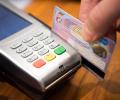
Tokenisation is the process of replacing debit and credit card numbers with a set of characters or tokens.

The share of total health expenditure as part of the gross domestic product (GDP) went down to 3.3 per cent in 2017-18 from 3.8 per cent in the previous two years, according to the national health account data released on Monday by the health ministry. The share of government expenditure as part of total expenditure as well as GDP has gone up from from 3.78 per cent to 5.12 per cent between 2013-14 and 2017-18, which could also explain a decline seen in out of pocket expenditure in 2017-18. Health ministry also emphasised the increase in the government health expenditure as part of the total GDP from 1.15 per cent in 2013-14 to 1.35 per cent in 2017-18.
North-eastern states have led the charge in recording a decline.
It's always been a struggle for economists and statisticians to forecast India's gross domestic product (GDP) correctly, and say where the economy is headed before the official numbers come out. If estimating the GDP is tough, forecasting it in real time is complicated. It involves looking at tens of indicators, such as industrial production, electricity consumption and exports, to arrive at a number.
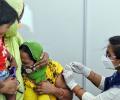
Experts, however, feel that given the intensity of the second wave and the high single dose coverage, India is in a good position to avoid any drastic wave in the near future.

There's no place like home, but even for the affluent buying one in India is difficult. On top of that, the coronavirus pandemic-now in its eighteenth month-has made life uncertain. A hopeful thing is buying a house looks alluring as loan interest rates fall below 7 per cent, their multi-decadal lows. The slow decline in GDP growth after demonetisation, followed by the economic shock caused by Covid-19 waves, has hurt us unevenly.
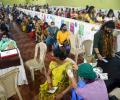
With the maximum dose gap of four months for Covishield, a large part of the population would not even be eligible for the second dose by the end of this year, report Ruchika Chitravanshi and Ishaan Gera.
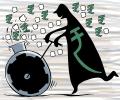
India was among the top-five economies with the largest general government capital stock level, said, in 2015, an International Monetary Fund report called "Making Public Investment More Efficient". The report fuelled a debate on countries sitting on piles of cash that could be used better. India was believed to have public assets worth $4.5 trillion. The report urged countries to start asset recycling. Six years after the report, Australia's success in asset recycling has turned India into a believer; despite doing averagely in its previous efforts on roads, railways or meeting its divestment targets.
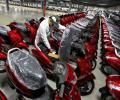
Retail sales of cars are back to January 2018 levels in August 2021. Two-wheeler retail sales are 22 per cent lower, nearly four years down the line.
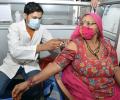
As the rural areas account for more than 40% of the country's population, they need to receive at least 41.7 per cent of the doses to make vaccine administration more equitable, reports Ishaan Gera.
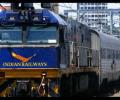
In 2019-20, the capital expenditure of Indian Railways (IR) increased 60 per cent over 2016-17. The draft National Railways plan envisages a further increase in IR's capital expenditure, but an analysis by Business Standard shows that IR has come to depend more on borrowings and budgetary support. In 2016-17, while 11 per cent of its capital expenditure (capex) was funded by internal sources, in 2019-20 the ratio dropped to less than 1 per cent. A 2015 Committee on Restructuring Railways had flagged that over-reliance on borrowings could exacerbate the financial situation of Railways.
 © 2025 Rediff.com - Investor Information - Advertise with us - Disclaimer - Privacy Policy - Sitemap - Feedback - About us - Terms of use - Grievances